
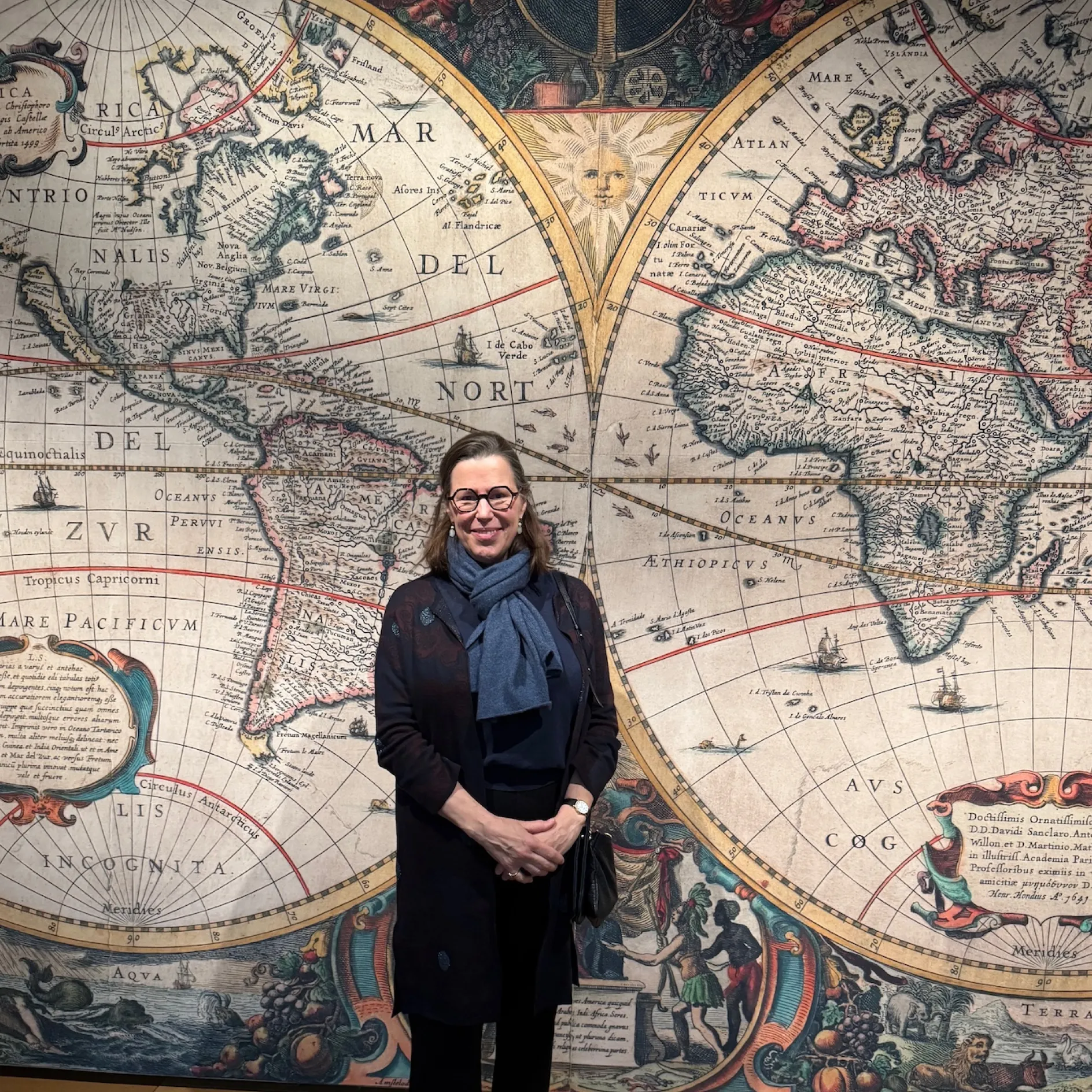
Claudia Swan’s principal scholarly commitment is to the history of northern European art, with a focus on the Netherlands in the seventeenth century. Her work on early modern art and visual culture is informed by and contributes to intersections of art history, history of science, material culture studies, and the history of global trade and politics. Drawing on the methods and the archives of several disciplines, her work aims to contribute to understanding how images operate within European scientific practice at the time of the scientific revolution; how theories of the imagination inform and shape visual and textual practices alike; and how the history of foreign trade, diplomacy, and material and visual culture are enmeshed, specifically in the infancy of the Dutch Republic.
She has edited and authored seven books and published many articles and book chapters on art, science, and collecting and on Dutch visual culture. In the last decade she has published articles on seventeenth-century taste, Dutch art, trade, and diplomacy in the global sphere; a co-edited volume Image, Imagination, and Cognition. Medieval and Early Modern Theory and Practice; and the edited volumes Tributes to David Freedberg. Image and Insight and Early Modern Geometries (NUNCIUS). Recent articles include one co-written with Marika Keblusek, “Carletti’s Case: Trade in the Crosshairs of the Dutch East India Company” (2025); “Ebony & Old Masters: Blackness and Representation in the Dutch Republic” (2025); and “Making a Case for Ebony” (2024). The co-authored Conchophilia. Shells, Art, and Curiosity in Early Modern Europe and her most recent monograph Rarities of These Lands. Art, Trade, and Diplomacy in the Dutch Republic appeared with Princeton University Press. She is currently working on an edited volume on the Elements in Early Modern Visual Culture (with Thalia Allington-Wood, Sophie Morris, and Rebecca Zorach) and Thinking Inside the Box. Cabinets, Chests, and Cases in Early Modern Europe (co-edited with Anne Goldgar, Marika Keblusek, and Mark Meadow). She is completing a monograph on Luster and Sheen. Worldly Taste in the Dutch Republic, which will incorporate her recent publications on ebony. Swan is committed to the notion that art history is a potent, protean form of historical investigation by way of material objects whose formation and function are linked to epistemological and political commitments and conflicts, and to expanding traditional conceptions of the art of the Dutch Republic and other early modern terrain accordingly.


